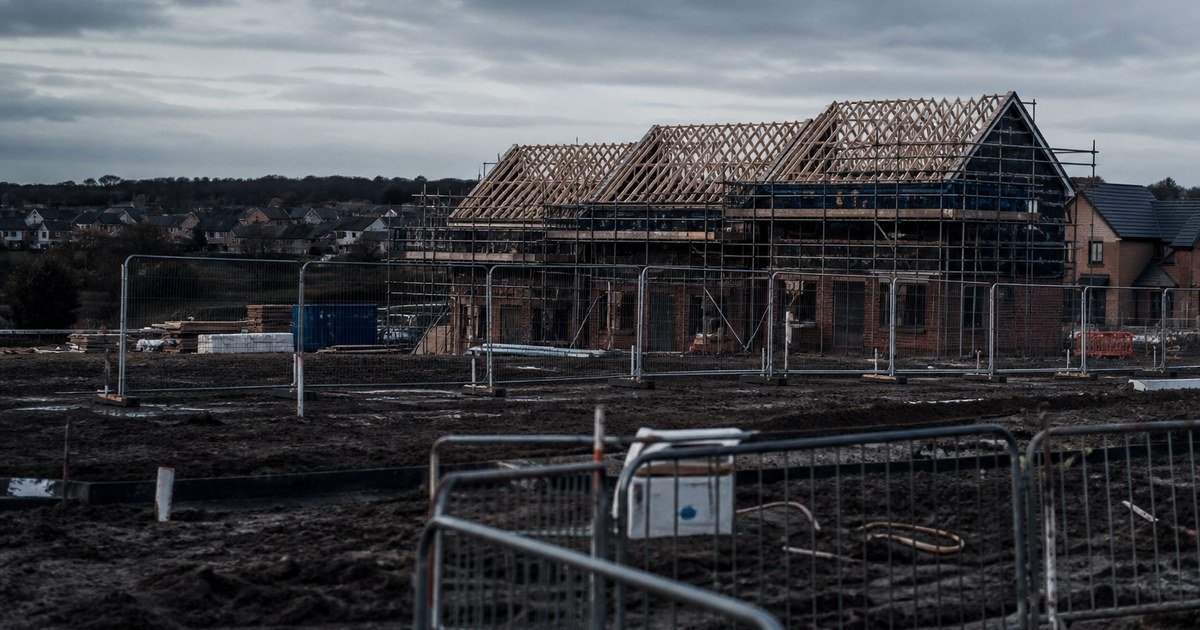
Knight Frank’s 7 August 2026 note on the squeeze on UK housebuilders puts early Residential Development Land Index figures beside soft buyer demand. Greenfield land values fell 5.5% in the quarter, taking the annual decline to 3%. Prime central London land fell 1% over the quarter and stands 3% lower year on year. Urban brownfield fell 2.5% in the quarter and 5% over the year. A Knight Frank survey of more than 35 small and volume housebuilders found eight in ten saw site visits and reservations fall in Q2. Nearly six in ten expect reservation volumes in 2026 to underperform a year earlier. For professional and corporate borrowers that mix reshapes GDV assumptions, site acquisition timing and how development finance is underwritten.
StatusKWO lends only on an unregulated commercial basis to professional property investors, developers and corporate borrowers. This note reads the Knight Frank pack for that audience. It is not consumer mortgage advice and it does not invent case studies or product rates beyond published sources and StatusKWO’s published commercial terms.
What Knight Frank reported on land values and housebuilder demand
Liam Bailey’s research note ties flat July house prices to a wider pause in buyer confidence. Knight Frank cites Lloyds’ July print of unchanged average prices and annual growth of 0.1%, the slowest rate since November 2023. The same note points to Bank of England Money and Credit for June 2026, where net mortgage approvals for house purchase rose to 58,200 from 56,600 in May yet stayed below the prior six-month average of about 61,400. Zoopla sales agreed in July were 9% below the same period a year earlier, as carried in the Knight Frank write-up.
The land numbers are the sharper credit input. Greenfield weakness of 5.5% in a single quarter is a material mark-to-market for sponsors holding consented or optioned plots. Brownfield’s deeper annual fall of 5% matters for urban regeneration and densification schemes that already carry heavier remediation and planning complexity. London’s milder quarterly dip does not reopen aggressive residual land calculations when annual values are still down 3%.
The housebuilder survey sits beside those index prints. About 60% of respondents expect land values to fall further. The rest expect a flat land market. A little under half expect start volumes to decline further in Q3, with the same share expecting no change. Planning delays were the most frequently cited challenge in Q2, named by 64% of respondents, followed by buyer sentiment at 52% and the short-term UK economic outlook at 48%. Looking into Q3, buyer sentiment overtakes planning as the biggest anticipated headwind at 58%, while half still flag planning delays. Material costs and availability sat at about 29%, as did the low level of active registered providers for Section 106 affordable homes.
This pack complements rather than replaces our July Construction PMI note and our 30% new-build price premium note. The PMI tracks activity and input costs. The premium note tracks finished-stock pricing versus existing homes. Knight Frank’s land and reservation data speak to what sponsors can pay for plots and how fast private sales may clear.
How soft reservations reshape GDV and sales-rate assumptions
Development loans work if the scheme can complete, sell or refinance inside the agreed window. Soft reservations attack the sales-rate line first. Eight in ten surveyed builders saw site visits and reservations fall in Q2. Nearly six in ten expect full-year reservation volumes to lag 2025. That is not a reason to halt every viable scheme. It is a reason to stop using early-2026 absorption rates in current appraisals.
Underwriters will ask for updated comps, current asking-price evidence and a cashflow that still works if private sales land slower than the original model. Off-plan reliance needs stronger equity and a longer interest reserve when buyer sentiment is the lead headwind into Q3. Schemes with pre-sales, local demand evidence or a clear refinance onto investment debt have a cleaner story than speculative GDVs built on last year’s enquiry rates.
Listed-builder colour in the same Knight Frank note shows the split inside the sector. Persimmon reported a net private sales rate of 0.72 per week in the five weeks after end-June, up 6% on a year earlier. It guided to around 12,500 full-year completions at the upper end of previous guidance. Taylor Wimpey guided to 10,600 to 10,800 homes, within the lower half of March guidance. It also called for targeted demand support and viability measures. Both firms still flag cost pressure linked to the Middle East conflict. Volume guidance and weekly sales rates belong in the credit file as market colour. They are not a substitute for the borrower’s own sales evidence on the subject scheme.
Our Lloyds July house price note already flagged a flat national price print. Soft land values plus soft reservations raise a second order risk. Sponsors who paid for land on firmer 2025 assumptions may now sit with thinner residual equity. Credit teams will re-cut land value, GDV and peak debt together rather than treat any one line in isolation.
Land banking, site acquisition and bridge-to-build timing
Falling land prices create opportunity for well capitalised buyers and a trap for thin equity. Opportunity appears when a plot can be secured below previous asking levels with enough contingency left for planning and build. The trap appears when a sponsor uses a short facility to warehouse land without a funded build programme or a named next lender.
Bridging loans suit time-critical site acquisition, light to heavy works and professional purchases where the exit sits inside months. A true development facility suits ground-up and heavier schemes with staged drawdowns against certified works. Our comparison of development finance versus bridging loans still frames that product split. Soft land markets do not change the product definitions. They change how long a bridge can safely sit before the build loan starts.
A bridge-to-build only works with a written next facility path, enough equity to absorb delay and a planning status that lenders can underwrite. Treating a short bridge as a substitute for a full development line is a common failure mode when starts are soft. Interest burns while contractor procurement or planning discharge slips. Underwriters will ask for the build programme, contractor status and refinance or sale path before they treat the bridge as temporary. Our note on bridging loans for ground-up development projects covers that packaging standard.
Auction finance remains a separate clock when lots need funds on a fixed completion deadline. Soft housebuilder demand does not extend those deadlines. Professional buyers who win development or land lots still need certainty of funds before the hammer. Portfolio finance can help sponsors recycle equity across several assets while one plot waits for a clearer start window. Cross-collateral still needs honest valuations on every security, including land marked down against the new Knight Frank prints.
StatusKWO’s published commercial terms currently show a monthly rate from 1.25%, an entry fee of 2%, an exit fee of 1.5% and a maximum LTV of 85%, with loan sizes from £10,000 to £10,000,000+ and terms of up to 16 months. Those figures are product terms, not a promise that every land bridge or development line prices at the floor. Soft reservations and falling land values push credit teams toward tighter haircuts on optimistic residuals and thin equity.
Planning delays versus buyer sentiment as credit risks
Knight Frank’s survey shows the risk stack shifting through the year. Planning delays dominated Q2 complaints at 64%. Buyer sentiment is expected to lead Q3 headwinds at 58%, with planning still named by half of respondents. For credit, that means two different clocks on the same file.
Planning risk sits in programme and condition discharge. Soft starts do not shorten determination periods or Section 106 negotiations. Our note on what lenders look for on planning permission still applies. Clear conditions, discharge evidence and a realistic programme protect both borrower and lender when the wider housebuilder cohort is already citing planning as a top constraint. The rising share of respondents flagging weak registered-provider appetite for affordable homes adds a viability line that many residual appraisals still understate.
Buyer-sentiment risk sits in the exit. Approvals at 58,200 in June are firmer than May yet still below the recent six-month average. That is a soft demand backdrop for private sales, not a collapse. Underwriters will still stress marketing periods and asking prices against current comps. They will also ask whether the scheme’s GDV assumed a stronger mortgage market than the Bank’s latest approvals series supports.
The Bank of England held Bank Rate at 3.75% on 30 July 2026 with a hawkish minority. Our note on that Bank Rate hold covers the MPC mechanics. A hold does not reopen cheap term funding on its own. Soft land values and soft reservations show why. Refinance quotes and sales rates still need stress at today’s conditions.
Build costs, contingency and listed-builder warnings
Knight Frank notes that S&P Global Construction PMI activity has fallen every month since January 2025, the longest continuous decline since the global financial crisis, even while July showed the slowest fall since March and the least marked housebuilding decline since October 2025. Input price inflation eased from May’s near four-year high. That matches the direction in our PMI article. Cooler average cost growth is welcome. It is not a licence to strip contingency.
Persimmon’s warning of additional inflationary pressure in 2027, including from the Middle East conflict, sits beside its claim that structurally lower build costs from in-house manufacturing provide important mitigation that may not fully offset the impact. Taylor Wimpey’s call for demand support and viability measures underlines the same point from the sales side. Cost and demand pressure can arrive together. Development packs that assume both cheaper packages and faster sales need both assumptions evidenced, not asserted.
Lenders will ask for current contractor quotes, not desk-top allowances from early 2026. They will also ask how the borrower handles a further delay if tender returns come in high or if a package needs re-running. Soft land values can tempt sponsors to stretch residual calculations to protect a purchase price. That habit fails when build costs stay sticky and reservations stay soft. Keep contingency funded and keep land price discipline in the same appraisal.
Our development finance guide for 2026 sets out product mechanics. This article is the live market check against that guide. Soft land and reservation prints raise the bar on equity, contingency and named exits. They do not cancel every viable scheme.
Exit refinance when starts and land prices are soft
Most development risk sits in the exit. Sale exits feel soft reservations and soft mortgage approvals first. Marketing periods can stretch. Asking prices that assumed firmer 2025 land and buyer conditions look optimistic against current Knight Frank and Bank of England prints. Underwriters will ask for updated appraisals, recent comps and a plan that still works if sales land slower than the original cashflow.
Refinance exits feel investment debt criteria, swap pricing and lender appetite for new-build stock. Our note on exit finance out of a development loan covers the mechanics. If housebuilder starts stay soft and land values are still expected to fall by most surveyed builders, a stretch refinance at practical completion needs stronger interest cover and more equity. Borrowers should evidence alternative exits rather than a single optimistic term sheet.
A Decision in Principle helps brokers package speed without pretending the exit is guaranteed. StatusKWO’s decision in principle engine is built for that professional workflow. A DIP is a documented starting point. It is not a completion promise.
Soft land markets can also create opportunity for well capitalised buyers. Delayed or distressed sites sometimes come to market when original sponsors run out of interest cover or residual equity. Those purchases still need a funded works plan and a realistic GDV. Buying someone else’s problem without contingency is not a specialist lending strategy.
What brokers and borrowers should prepare before underwriting
- Re-cut land value, GDV and sales rates against current comps and the Knight Frank quarterly land moves before you submit a development pack.
- Keep build contingency funded. Cooler input inflation in July does not remove package volatility or Middle East-linked materials risk flagged by listed builders.
- Separate bridging from development use cases. A short facility to secure land still needs a named build loan or sale exit.
- Evidence planning status, Section 106 and registered-provider assumptions with dates. Soft sector starts do not excuse thin packaging.
- Stress refinance and sale exits at today’s Bank Rate, approvals and reservation conditions after the 30 July hold.
- Use a Decision in Principle to lock a professional starting point, then complete full underwriting with current valuations.
Brokers who bring that pack early save time. Soft housebuilder demand rewards clean files. It does not reward optimistic residuals.
Frequently asked questions
Do falling land values make development finance easier to obtain?
Not automatically. Lower entry prices can improve residual equity if the purchase price reflects the new market. They also warn that GDVs and sales rates may be softer. Lenders still want funded contingency, planning clarity and a named exit. A cheap plot with a weak sales plan is not easier credit.
Should sponsors use bridging finance to buy land while values are soft?
Only with a written next facility path and enough equity to absorb delay. A short bridge can secure a plot. It is not a substitute for a staged development line. Soft reservations and planning delays make open-ended land bridges expensive and hard to refinance.
How should GDV be stressed after the Knight Frank survey?
Use current local comps and slower private sales assumptions than early-2026 models. Eight in ten surveyed builders saw reservations fall in Q2. Nearly six in ten expect full-year volumes to lag last year. Off-plan heavy schemes need more equity and a longer interest reserve.
Does the Bank of England’s June approvals print change specialist lending criteria?
It is a demand input, not a product rule. Approvals at 58,200 are firmer than May yet below the recent six-month average. That supports cautious sales-rate stress rather than a freeze on professional development lending. StatusKWO still lends on an unregulated commercial basis to professional and corporate borrowers only.
Where can professional borrowers start with StatusKWO?
Use the decision in principle engine for a documented starting point on commercial bridging or development-style facilities, or speak to the team about development finance packaging. Bring current valuations, planning evidence and a named exit. Soft land markets reward preparation.