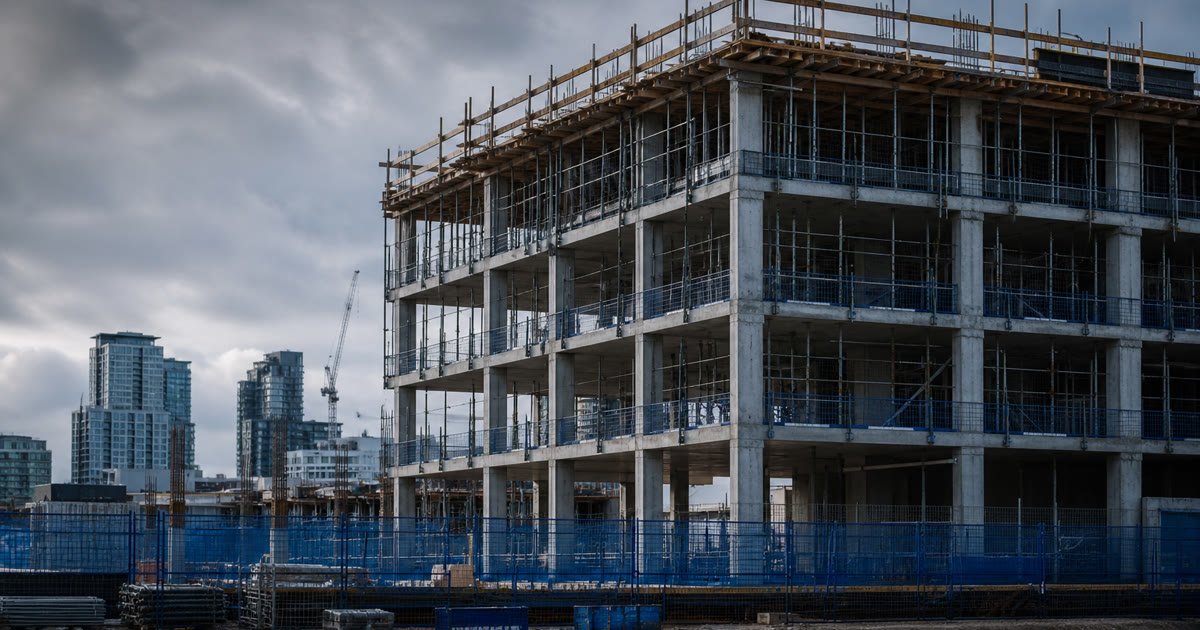
The S&P Global UK Construction Purchasing Managers’ Index rose to 44.7 in July 2026 from 38.4 in June, according to Builders Merchants News coverage of the release and ADVFN’s summary of the same pack. That is the highest reading in four months and still below the 50 line that separates expansion from contraction. Commercial work printed 46.8. Housebuilding printed 41.8, its least severe fall since October 2025. Civil engineering stayed weakest at 38.3. Activity has now contracted every month since January 2025, the longest unbroken run since the global financial crisis. For professional and corporate borrowers that mix matters more for peak debt, contingency and exit quality than any single headline number.
StatusKWO lends only on an unregulated commercial basis to professional property investors, developers and corporate borrowers. This note reads the July Construction PMI for that audience. It is not consumer mortgage advice and it does not invent case studies or product rates beyond published sources and StatusKWO’s published commercial terms.
What the July 2026 Construction PMI reported
A Reuters wire carried on Global Banking and Finance Review on 6 August confirms the same headline move. The July index jumped from June’s deep 38.4 print and cleared the median forecast in a Reuters poll of economists. Tim Moore, Economics Director at S&P Global Market Intelligence, said July data suggests the sector has started to stabilise after a sharp downturn through the second quarter of 2026. Activity still fell in all three main categories. In each case the pace of contraction was much slower than in June.
New business fell at the slowest rate for ten months. Some firms reported a turnaround in tender opportunities across commercial development, residential projects and transport infrastructure. Many still cited geopolitical uncertainty and soft domestic demand as a drag on customers. Employment fell for a nineteenth month, though at the slowest pace since February. Subcontractor availability improved to the strongest level since April 2025. Input price inflation eased to a five-month low, even while firms still reported fuel surcharges and higher raw material prices linked to the Middle East conflict. Year-ahead confidence was the strongest since February, with around 38% of respondents expecting expansion and 17% expecting a decline.
This pack sits beside, rather than instead of, the institutional liquidity read in our Q2 commercial property investment note and the residential price prints in our Nationwide July house price note. Soft construction activity and soft house price growth tell the same underwriting story from different instruments. Sale and refinance exits still need current evidence.
Why a reading below 50 still matters for development underwriting
A rebound from 38.4 to 44.7 is real. It is not a return to growth. Readings below 50 mean more firms reported a fall in activity than a rise. The sector is still shrinking, only more slowly. For development finance that distinction drives how credit teams treat GDV, sales rates and interest through the build.
Development loans are temporary by design. They work if the scheme can complete, sell or refinance inside the agreed window. A long contraction in construction activity points to fewer starts, thinner order books and more competition for the tenders that do clear. That can stretch programmes. It can also improve subcontractor availability, which July’s survey shows. Underwriters will take both sides. Soft demand raises exit risk. Better labour supply can support delivery if the borrower still has equity and a funded plan.
The Bank of England held Bank Rate at 3.75% on 30 July 2026 with a hawkish minority. Our note on that Bank Rate hold covers the MPC mechanics. A hold at 3.75% does not reopen cheap term funding on its own. The July PMI shows why. Builders remain cautious on demand even while cost inflation cools from May’s near four-year high. Refinance quotes and sales rates still need stress at today’s conditions, not at last year’s optimism.
Our development finance guide for 2026 sets out the product mechanics. This article is the live market check against that guide. Soft PMI prints raise the bar on contingency, peak debt and named exits. They do not cancel every viable scheme.
Housebuilding, commercial work and civil engineering in the same print
The sub-sector split matters for security type. Commercial construction was the most resilient segment at 46.8, up from 41.5 in June. Housebuilding at 41.8 remains in contraction but is no longer falling as hard as it did through late spring. Civil engineering at 38.3 is still the softest, though the pace of decline eased from June’s multi-year low.
Professional borrowers funding residential-led schemes should treat the housebuilding index as a sales-rate warning, not as a valuation shortcut. Soft Nationwide annual growth and a PMI that is still below 50 both argue against aggressive off-plan absorption assumptions. Schemes that rely on quick private treaty sales into a thin buyer pool need more equity and a longer interest reserve. Schemes with pre-sales, strong local demand evidence or a refinance path onto investment debt have a clearer story.
Commercial and mixed-use schemes sit closer to the commercial activity print and to the CRE lending backdrop covered in the August BNP Paribas pack. Institutional investment volumes fell sharply in Q2. Bank CRE lending hit a two-year low. A commercial PMI that is less weak than housebuilding does not reopen high leverage on secondary stock. It suggests some tender flow is returning while larger refinance markets stay selective.
Civil engineering weakness is less directly relevant to most StatusKWO residential and commercial development files. It still colours subcontractor markets and materials pricing where schemes share the same supply chain. Brokers packaging ground-up work should still read our note on bridging loans for ground-up development projects and be clear whether the facility is a true development line or a short bridge ahead of a build loan.
Build costs, supply chains and contingency on live schemes
July’s input price print is the other half of the credit story. Cost inflation eased to a five-month low. Supplier performance improved for the first time in five months as softer demand for materials and fewer transport delays helped delivery times. That is welcome after May’s spike. It is not a reason to strip contingency from an appraisal.
Fuel surcharges and raw material prices linked to the Middle East conflict still appear in survey comments. Builders can report cooler average cost growth while individual packages remain volatile. Lenders will ask for current contractor quotes, not desk-top allowances from early 2026. They will also ask how the borrower handles a further delay if tender returns come in high or if a package needs re-running.
Planning risk sits beside build cost. Soft starts do not shorten planning timelines. Our note on what lenders look for on planning permission still applies. Clear conditions, discharge evidence and a realistic programme protect both borrower and lender when the wider sector is still contracting.
Purchasing activity fell again in July, though at the softest pace since September 2025. Firms buying less material is consistent with thinner pipelines. For a live site that already has funding, the practical read is dual. Materials may be easier to source. Forward order books for the next scheme may stay thin. Package both facts in the credit narrative.
Bridging versus development finance when starts stay soft
Bridging loans and development facilities solve different clocks. A bridge suits time-critical acquisition, light to heavy works and professional purchases where the exit sits inside months. Development finance suits ground-up and heavier schemes with staged drawdowns against certified works. Our comparison of development finance versus bridging loans covers the product split. The July PMI changes how each product is underwritten, not which product exists.
When starts are soft, some sponsors use a short bridge to secure land or a standing asset while planning or contractor procurement finishes. That only works with a named next facility and enough equity to absorb delay. Treating a bridge as a substitute for a full development line is a common failure mode. Interest burns while the site waits. Underwriters will ask for the build programme, the contractor status and the refinance or sale path before they treat the bridge as temporary.
StatusKWO’s published commercial terms currently show a monthly rate from 1.25%, an entry fee of 2%, an exit fee of 1.5% and a maximum LTV of 85%, with loan sizes from £10,000 to £10,000,000+ and terms of up to 16 months. Those figures are product terms, not a promise that every development or bridge prices at the floor. Soft construction activity and soft residential comps push credit teams toward tighter haircuts on optimistic GDVs and thin equity.
Auction finance remains a separate use case when lots need funds on a fixed completion clock. Soft PMI data does not extend those deadlines. Professional buyers still need funded completion before the hammer. Portfolio finance can support sponsors who recycle equity across several assets while one scheme waits for a better start window. Cross-collateral still needs honest valuations on every security.
Exit paths when refinance and sale clocks are stretched
Most development risk sits in the exit. Sale exits feel soft housebuilding activity and soft buyer demand first. Marketing periods can stretch. Asking prices that assumed early-2026 momentum look optimistic against current Nationwide growth and a PMI still below 50. Underwriters will ask for updated appraisals, recent comps and a plan that still works if sales land slower than the original cashflow.
Refinance exits feel bank CRE appetite, swap pricing and investment debt criteria. Our note on exit finance out of a development loan covers the mechanics. If institutional CRE lending is thin and construction confidence is only tentatively firmer, a stretch refinance at practical completion needs stronger interest cover and more equity. Borrowers should evidence alternative exits rather than a single optimistic term sheet.
A Decision in Principle helps brokers package speed without pretending the exit is guaranteed. StatusKWO’s decision in principle engine is built for that professional workflow. A DIP is a documented starting point. It is not a completion promise.
Soft construction prints can also create opportunity for well capitalised buyers. Distressed or delayed sites sometimes come to market when original sponsors run out of interest cover. Those purchases still need a funded works plan and a realistic GDV. Buying someone else’s problem without contingency is not a specialist lending strategy.
Practical steps for brokers and borrowers now
- Re-cut GDV and sales rates against current comps, not early-2026 assumptions, before you submit a development pack.
- Keep build contingency funded. Cooler input inflation in July does not remove package volatility or Middle East-linked fuel and materials risk.
- Separate bridging from development use cases. A short facility to secure land still needs a named build loan or sale exit.
- Evidence planning status, contractor quotes and programme with dates. Soft sector starts do not excuse thin packaging.
- Stress refinance and sale exits at today’s Bank Rate, swap and CRE lending conditions after the 30 July hold.
- Use portfolio equity carefully if one scheme is delayed. Value weaker assets honestly before cross-charging them.
StatusKWO underwrites unregulated commercial facilities for professional and corporate borrowers across development, bridging, auction and portfolio use cases. If you have a live scheme or a land acquisition in train, start with the decision in principle engine or speak to the team with the security address, loan amount, term and exit route.
Frequently asked questions
Does a Construction PMI rise to 44.7 mean the sector is growing again?
No. Readings below 50 still signal contraction. July’s 44.7 print is the softest decline in four months, not a return to expansion. Activity has fallen every month since January 2025.
How should development finance borrowers use this survey?
Treat it as a stress test on sales rates, peak debt and contingency. Soft housebuilding and commercial activity argue for current contractor quotes, funded interest and exits that work if marketing or refinance takes longer than the first cashflow assumed.
Is cooler input cost inflation enough to cut contingency?
No. July eased cost inflation to a five-month low and supplier performance improved, but firms still reported fuel surcharges and higher raw material prices. Contingency should reflect live package risk, not a single survey month.
When is a bridging loan the better tool than development finance?
Use a bridge for time-critical acquisition or shorter works with a clear exit inside months. Use development finance for staged ground-up or heavier schemes. Soft starts do not turn a bridge into a full build facility.
Is StatusKWO regulated consumer credit?
No. StatusKWO provides unregulated commercial finance to professional and corporate borrowers only. It is not FCA consumer credit and it is not suitable for regulated residential owner-occupier borrowing.