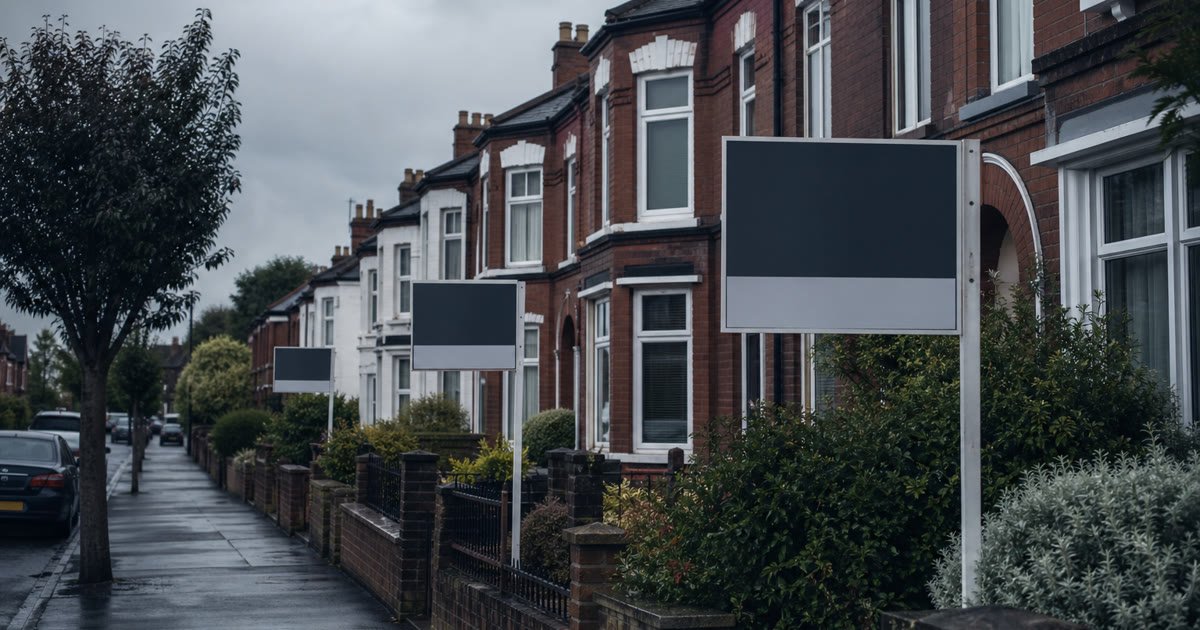
The sale-led bridging loan is already late. The agent’s May asking price is still on the particulars. Buyers have walked. Rightmove’s August 2026 House Price Index, released on 17 August, puts newly listed asking prices 2.0% lower on the month, down £7,360 to £364,999. That is the largest August drop since 2018 and a bigger seasonal cut than the ten-year August average of 1.3%. Credit will not treat last spring’s ask as the repayment.
Asking prices are the start of a sale, not the end of one. The print still changes how a specialist desk reads a sale exit, an auction reserve and a development GDV. It is a marketing-price series. It is not the official completed-sales index.
Asking prices are not sold prices
Rightmove compiles asking prices of homes coming onto the market through estate agency branches on its portal. The August PDF says the national sample this month was 101,305 asking prices for properties put on sale from 12 July to 8 August 2026. The index sits at 282.2, down from 287.9 in July. The series measures the first advertised figure. It does not measure the hammer, the mortgage offer or the Land Registry completion.
That gap matters on a live file. A borrower who points to last year’s sold comparable is talking about a different point in the chain. A broker who pastes this month’s Rightmove average into a GDV is talking about new sellers, not about what actually exchanged. Underwriters will still want both. They will weight the local sold evidence harder when the new-listing ask is falling.
Our Nationwide July house price note covered a lender survey of mortgage-backed transactions, with annual growth at 1.8% and an average of £277,542. Our Lloyds July note covered a flatter annual path of 0.1% and an average of £299,253. Those two already disagree because samples differ. Rightmove sits earlier still. New asks can fall while completions from earlier instructions are still catching up. Completions can look steady while new sellers are already cutting.
The official May 2026 UK House Price Index from Land Registry and the ONS remains the completed-sales print. HM Land Registry has said the June official index is due at 09.30 on 19 August. Do not pre-empt that figure. A pack still needs the live asking-price check, the near-term lender surveys and the lagged sold-price index. Citing only one series is incomplete.
Property118’s write-up of the same release repeats the national 2.0% monthly cut and the 1.0% annual fall, the largest yearly drop since December 2023. Trade press is useful confirmation. It is not a substitute for the Rightmove tables.
The 2 percent August cut and the stock behind it
August asking prices usually dip. This one is heavier. Rightmove puts the ten-year August average at a 1.3% fall. This month printed 2.0%. Available homes for sale are at a 12-year high for this time of year. A quieter holiday period sits on top of that stock. Sellers who still chose to list have cut the ticket to get seen.
Annual asking prices are now 1.0% below August 2025. Rightmove calls that the largest yearly fall since December 2023. The monthly path into the print was already soft. July’s newly listed average was £372,359, down 1.0% on June. June was £376,191. The August step to £364,999 is the sharpest of those summer cuts.
The mix inside the average is not even. Excluding inner London, first-time-buyer stock printed £225,525, barely moved. Second-stepper stock printed £341,807, down 1.3% on the month. Top-of-the-ladder stock printed £667,056, down 2.8%. The dearer end took the larger monthly cut. That is a credit input on family houses and on higher-value sale exits.
Colleen Babcock, Rightmove’s property expert, says sellers who price from day one on current evidence give themselves a better chance of finding a buyer. She also says nearly three-quarters of homes sold so far this year went through without an asking-price reduction. Read that the other way. The stock that still sits, reduced or not, is competing with a 12-year pile of listings. A bridge that assumes the first ask will be the sale price is the file that stretches.
Buyer demand is not dead. Rightmove records a 5% lift in demand since Andy Burnham became Prime Minister on 20 July. Buying activity is still about 10% below last year. A mini bounce in clicks is not a clearance rate. National time to secure a buyer was 63 days in the July activity table. That clock is long enough to eat a short interest reserve if the exit was written as a four-week sale.
Mortgage pricing sits beside the stock. Rightmove’s daily tracker, using Podium Solutions data covering 95% of mortgage lending and excluding specialist lenders, puts the average two-year fixed rate at 5.09%, up from 4.95% last month. The Bank of England held Bank Rate at 3.75% on 30 July. Our Bank Rate hold note covers the 6 to 3 vote. Headline Bank Rate did not rise. The two-year fixed average still crossed 5%. Refinance exits feel that number, not the MPC minutes.
Rightmove has cut its 2026 national asking-price forecast from plus 2% to a range of 0% to minus 2%. That is a portal forecast, not a credit committee. Treat it as Rightmove telling its own sellers that the rest of the year is no longer a gentle recovery print. Do not treat it as a promise that every postcode falls 2%.
North versus south and London’s 73-day clock
The national £364,999 hides the underwriting map. Rightmove says northern England is up 1.5% on a year ago. Southern England is down 1.8%. London is the weakest Great Britain region on the year at minus 3.1%. It also took a 4.4% monthly cut to £646,451. Days to find a buyer there printed 73. The capital has the largest choice of homes since 2010. Rightmove’s PDF calls that a 16-year high of available stock.
The North West recorded the largest annual asking-price rise at 1.9%, to £273,421, with 56 days to find a buyer. The North East printed £198,109, up 1.7% on the year, with a 52-day clock. Scotland printed £199,888, up 1.1% on the year, with 32 days. A Scottish sale-exit file and a London sale-exit file are not the same product just because both sit under one UK headline.
The South East fell 2.1% on the month and 2.1% on the year to £469,604, with 69 days. The South West printed 71 days. The East of England, Wales and the Midlands sit between those poles. Yorkshire still shows a modest annual gain after a monthly dip.
That split already showed up on other August desks. Our RICS July housing survey note flagged more negative price balances in London, the South East and the South West. London’s year-ahead sentiment balance sat at minus 23%. Rightmove is not repeating the RICS method. It is putting a price tag and a days-on-market figure on the same geography. Surveyor breadth plus a 4.4% London asking-price cut in one month is enough to haircut an unstressed 2025 London comparable.
Rightmove also flags London-specific stretch that a northern terrace file does not carry in the same way. An average London home is put at around 17 times the national average annual wage and 38% above the South East. Flats carry service charge and lease scrutiny that slows sales. Marc von Grundherr of Benham and Reeves, quoted in the Rightmove PDF, says the difficulty is where asking-price expectations stay anchored to a market that no longer exists, especially in parts of the flat market. That is how a sale-led London file actually stalls.
A portfolio book mixed across those regions needs concentration analysis. Northern terraces with a 52-day clock do not offset a cluster of London flats on a 73-day clock if the exit is a sale of the southern stock. Cross-collateral can still work. It does not average away a slow postcode.
Sale exits when the ask is already the problem
Most specialist facilities are temporary. The loan works if the borrower can sell, refinance or recycle inside the term. Our exit strategies note still stands. This print attacks the sale-led version of that work.
If the security is already on the market, put the current ask, every reduction and the days on market in the first email. An original May figure that has not moved, sitting against a 2.0% national new-listing cut and a 12-year stock pile, will be treated as stale. Credit will ask why a new seller in the same postcode is coming out 2% cheaper while this asset has not.
If the security is not yet listed, do not write the exit off last year’s asking schedule. Use current new listings and current sold evidence. Build a slower absorption assumption in London, the South East and the South West. Interest still accrues. A 16-month maximum term is not a reason to underwrite a four-month marketing fantasy.
Refinance exits feel the 5.09% two-year fixed average more than they feel Rightmove’s asking-price index. A sale that takes longer still dumps the borrower back onto that refinance market later, with more accrued interest and a tired asset. Keep the term short where the exit is real. Do not extend a bridge because “prices always come back in September”. Rightmove’s own 2026 forecast now sits between unchanged and minus 2% for the year.
Loan to value is calculated on the lender’s valuation, not on the borrower’s preferred ask. StatusKWO’s published maximum LTV is 85%. Many live files sit below that once works, lease term and exit quality are in the number. A falling new-listing print is a reason for a tighter residual, not a reason to stretch to the product cap on a sale-led London or South East asset.
Auction bids against a falling new-listing print
Auction clocks do not care that August is quiet. The catalogue date is the term. Auction finance still has to complete on that date. A 4.4% monthly cut in London asking prices does not add a week to a 28-day completion.
What it does change is the bid. Our July auction volumes note already showed a choosier room. Lots offered were 4,424. The national success rate eased to 64.7%. Receipts fell 18.6%. Paying above local new listings because the room felt busy is how a 28-day file becomes a stressed refinance. Set the maximum bid against current asks, current solds and the works. Build the interest reserve for the hold you actually need, not for the hold you hope to skip.
Private treaty softness is not extra time in the auction room. It is a warning about the sale or refinance after completion. If the exit is a later private sale in London, the 73-day clock belongs in the cashflow. If the exit is a refinance, the 5.09% two-year fixed average belongs in the coverage test.
Do not mix a 28-day hammer with a staged development drawdown in the same enquiry. Auction bridging is a completion tool. A build line is a programme. Mixing them wastes a week while the file bounces between desks.
Development GDV and portfolio books after this print
Housebuilder demand and land values were already soft in our Knight Frank land note. Rightmove adds the asking-price side of the same sales market. A GDV written off spring listings in the South East needs a haircut. A northern scheme with a 52-day clock still needs local comps. It does not get a free pass because the UK average fell.
A 2.0% national asking-price cut is not a 2.0% cut to every plot. It is a reason to stop compounding last year’s absorption rate into the cashflow. Sponsors selling into London should treat the 4.4% monthly move and the 73-day clock as a slower private-sales line until local agent evidence says otherwise. Land bridging into a later build still needs a written next facility and enough equity to sit through that slower line.
Sale of surplus portfolio titles uses the same asking-price market as any other vendor. A professional buyer can find more choice. They can also find more competing stock. Buy the asset because the rent roll, condition and hold case work. Do not buy it because a 12-year listings high looks cheap on a slide. Void, compliance and refinance pricing still sit in the number.
The facilities on this desk are unregulated commercial loans. The borrower has to be a professional investor, a developer or a company. An owner-occupier main-home file sits outside that perimeter. StatusKWO does not write FCA consumer credit. Published commercial terms currently show a monthly rate from 1.25%, an entry fee of 2%, an exit fee of 1.5% and a maximum LTV of 85%, with loan sizes from £10,000 to £10,000,000+ and terms of up to 16 months. Those figures are the product schedule. They are not a quote for every postcode in this print.
What to send with the file this week
Put the Rightmove August asking-price print beside the latest lender HPI and, from 19 August, the June official UK House Price Index. Name the region. Name the days on market. Do not send a UK average as if it were the security.
If the exit is a sale, attach current particulars, reduction history and competing new listings. If the asset is a London flat, put the lease term, service charge and any cladding or building-safety papers in the same pack. If the exit is a refinance, attach a current product type and a coverage test that uses today’s fixed-rate market, not last winter’s. Our packaging note covers identity, title and source of funds. This print is the extra page on price.
A decision in principle is the practical next step for a professional file that already has an address, a loan amount, a term and a named exit. It is a documented starting point. It is not a completion promise. Valuation and legal still run. A clean pack after a 2.0% asking-price cut is a file that admits the new ask. It is not a file that argues with the portal.
Frequently asked questions
Are Rightmove asking prices the same as sold house prices?
No. Rightmove measures the first advertised price of homes newly listed on its portal. Lender house price indices measure mortgage-backed transactions. The official UK House Price Index measures completed sales reported to Land Registry and the other UK registries. A 2.0% fall in new asking prices is a marketing-price move. It is not automatically a 2.0% fall in sold values.
Why did new seller asking prices fall 2 percent in August 2026?
Rightmove points to a quieter holiday period sitting on a 12-year high of homes for sale at this time of year. Sellers who still listed cut the ticket. The 2.0% monthly drop is larger than the ten-year August average of 1.3% and the largest August fall since 2018. Annual asking prices are 1.0% lower than a year earlier.
Does a fall in asking prices change how much can be borrowed on a bridge?
The loan is sized off the lender’s valuation and the exit, not off the borrower’s preferred ask. A softer new-listing print is a reason for tighter residuals on sale-led files, especially in London and the South East. StatusKWO’s published maximum LTV is 85%. Many live files sit below that once stock, lease and exit quality are in the number.
How should a sale-exit file be packaged after this print?
Send the current ask, every reduction, days on market and competing new listings with the identity, title and exit evidence. Do not leave last spring’s particulars as the repayment plan. London flats need lease and service-charge papers in the same pack. A Decision in Principle can start the file. It does not replace a current valuation.
When is the next official UK House Price Index after this Rightmove print?
HM Land Registry has said the June 2026 official UK House Price Index is due at 09.30 on 19 August. That series is completed sales, not asking prices. Hold both. Do not treat Wednesday’s official print as a reason to ignore Monday’s asking-price cut. Do not treat Rightmove as a substitute for sold evidence.