The DIP cleared on LTV. Title looked clean. Then credit asked for the buildings schedule and the broker forwarded an email reading “cover arranged” with no PDF, no sum insured and no start date. The bridging loan did not fall over on price. It stalled on a security condition that every specialist desk treats as non-negotiable.
Short facilities for professional landlords, investors and corporate SPVs still need real cover before funds move. Owner-occupier main-home lending sits outside that book. StatusKWO’s published schedule currently shows a monthly rate from 1.25%, an entry fee of 2%, an exit fee of 1.5%, LTV up to 85%, loans from £10,000 to £10,000,000+ and terms up to 16 months. None of those figures replaces a live policy that matches the asset, the occupancy and the charge.
The schedule that never left the broker’s drafts folder
A tidy spreadsheet is not underwriting evidence. Credit wants the insurer’s schedule or cover note for the named title, with the period of insurance that covers drawdown and the early weeks of the facility. A verbal promise to “sort buildings next week” fails on day one of an auction finance clock.
Our general bridging pack note covers identity, companies and exits. The auction memorandum pack already flags insurance when risk has passed. What follows is narrower. It is the buildings insurance evidence a specialist desk wants before it funds an unregulated commercial bridge against residential or light commercial stock.
Start with one page. Address and title number. Freehold or leasehold. Occupied, vacant or works. Named insurer and policy number. Period of insurance. Sum insured. Excess. Lender interest status. Named exit. Gross and net loan. Term. Borrower name. Then attach the schedule PDF. Marketing photos of a nice facade do not prove cover.
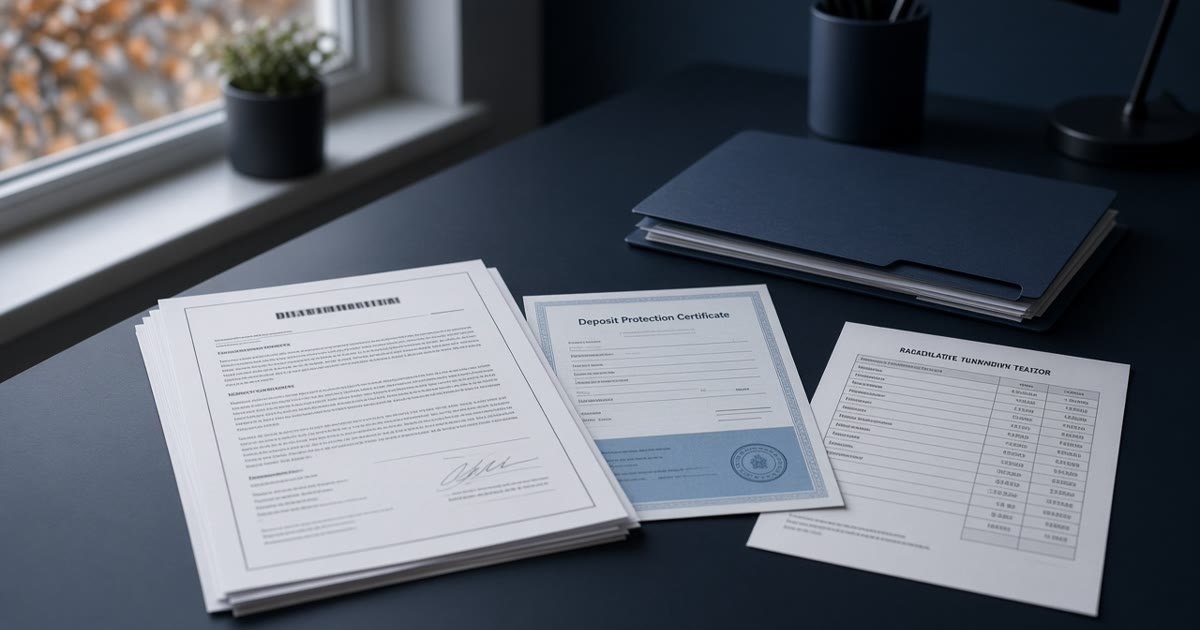
What the policy PDF must show credit before drawdown
Open the schedule, not a broker summary. The Association of British Insurers is plain that appropriate buildings cover is usually a mortgage condition and that buyers should have a policy in place when they exchange. Their mortgage insurance guidance also separates buildings cover from contents. Bridging desks care about the structure first.
Match the insured address to the title and the valuation. Flats in a converted terrace often share a marketing address that does not match the charge schedule. Credit will stall if the policy sits on Flat 1 while the facility charges Flat 2. Wrong postcode. Wasted day.
The period of insurance must cover completion and stay live through the early facility weeks. A quote that expires before funds land is not a funded condition. A renewal invitation with last year’s figures and no confirmation of premium paid is not either. Put the paid schedule or the cover note with the inception date in the zip.
Lender interest belongs on the page. Many packs still say “interest noted”. Say what the insurer has actually confirmed. First loss payee wording, composite insured status or a clear note of interest each mean different things in practice. Do not invent a composite endorsement because a broker template has a tick box. Attach the endorsement or the broker letter that quotes the policy number and the lender name.
Premium status matters. A policy that lapses for non-payment mid-bridge leaves the charge unprotected. If the borrower pays annually, show the receipt or the debit confirmation. If they pay monthly, show the live status and who will keep the direct debit funded while the facility runs.
Sum insured versus market value and why rebuild cost wins
Purchase price is not the sum insured. Market value is not either. Buildings cover should track reinstatement cost, the amount needed to rebuild the structure after a serious insured event. The ABI points borrowers to rebuild-cost guidance rather than sale price. The BCIS rebuild calculator exists for that reason.
Credit will compare the sum insured to the valuation commentary and to common sense on the asset. A £900,000 terrace with a £180,000 sum insured looks underinsured. A light industrial unit priced on investment yield with a domestic house rebuild figure looks wrong. Say how the figure was set. Surveyor reinstatement figure. BCIS output. Broker rebuild assessment. Silence reads as guesswork.
Underinsurance bites twice. First at claim stage when the insurer averages or reduces settlement. Second at exit when a take-out lender or cash buyer opens the same schedule and asks why the rebuild figure never moved with the works. Write the gap early if one exists. Credit would rather price a retention or a condition than discover a hollow schedule on the morning of drawdown.
Index linking helps when the policy confirms it. It does not excuse a starting figure that was never right. Works bridges need a second look. If the facility funds a loft conversion, a rear extension or a full strip-out, the sum insured may need to rise as the works complete. Put that plan next to the development finance question when the programme is heavy. A light bridge that assumed a weekend of contractors will not carry a mid-build reinstatement gap forever.
Excesses belong on the one-pager. A specialist desk can live with a commercial excess when the borrower can fund it. An excess that swallows the borrower’s cash buffer on a vacant lot is a different file. Write the number. Do not hide it in page four of the booklet.
Occupancy vacant works and landlord endorsements that change cover
Standard owner-occupier wording rarely fits a professional bridge. Tenanted stock needs a landlord or let property endorsement. Local authority landlord pages still remind landlords to tell their buildings insurer when a property is let. Medway Council’s private landlord checklist is blunt. Tell the insurer. Get the right cover. A household policy left on “owner occupied” while three ASTs sit in the tenancy pack is a claim dispute waiting to happen.
Student lets, corporate lets and holiday use each carry their own insurer questions. If the rent roll shows a company occupant or a short-stay model, say so before credit prices a standard BTL endorsement. Wrong use class on the schedule is as bad as a missing schedule.
Vacant periods need their own honesty. Many policies restrict cover or raise excesses after a set number of unoccupied days. Auction purchases, probate sales and works bridges often sit empty. Say the vacancy length. Attach the vacant-property endorsement or the specialist vacant wording. “Between tenants” for eighteen months is not a soft phrase. It is a different risk.
Inspection warranties matter on vacant stock. Some insurers want fortnightly visits, drained water systems or boarded openings. If those warranties exist, the borrower must be able to keep them. A refinance exit that depends on a term lender will ask the same questions. Put the inspection log plan next to the vacancy note when the asset will sit empty through winter.
Works change the story again. Hot works, structural opening up and contractor presence can void or limit ordinary landlord cover. If the borrower is stripping kitchens, removing load-bearing walls or running a full refurb, credit needs the works endorsement or a contract-works add-on that matches the programme. A schedule that still describes a fully occupied BTL while the valuation photographs show floorboards and no kitchen fails the common-sense test.
Commercial and mixed-use titles need the right product class. A shop-and-flat on a high street is not a three-bed semi. Public liability and loss of rent may sit beside buildings cover on larger files. Put the use class on page one so the underwriter does not discover the A3 unit in the lease after offer.
Auction files where risk passes before completion
Auction buyers do not get a gentle gap between offer and exchange. Under common auction conditions, risk often passes when the hammer falls. The buyer may still have twenty-eight days to complete, but the building can burn on night two. RICS consumer guidance on property auctions is clear that insurance is generally up to the buyer from auction day.
That is why the insurance pack sits next to the memorandum and deposit papers, not after legal completion. Our auction legal pack note covers special conditions and searches. Insurance still needs its own PDF with an inception date that matches exchange. A cover note dated the Friday after the hammer is late if risk already moved on Wednesday.
Special conditions can change the default. Some lots keep seller insurance for a short window. Some leasehold lots ride on a block policy from exchange. Read the pack. Quote the clause on the one-pager. Do not assume every catalogue follows the same risk rule.
Conditional auction lots still need a plan. If exchange waits on a later date, say when risk moves and who insures in the meantime. Unconditional lots leave less room for a late broker chase. The file that treats insurance as a completion-week chore is the one that misses the 28-day clock.
Deposit cash does not pause for a missing schedule. Neither does the lender’s solicitor once the facility is under offer. Brokers who pre-agree a specialist auction insurer or a binder that can incept on hammer day save the file a week of panic. The borrowers who wait until the valuation report arrives are the ones calling credit on day twenty-two.
Leasehold blocks and who holds the block policy
Leasehold files fail when brokers attach a contents quote for the flat and call it buildings cover. In many blocks the freeholder or management company holds the buildings policy and recovers the premium through the service charge. Our leasehold pack already asks for lease wording and demands. Insurance sits inside that story.
Credit wants the block schedule or a broker letter that confirms the flat address is insured, the sum insured or declared value for the building, the period of insurance and how the lender’s interest will be noted. A service-charge demand that shows an “insurance” line without the policy PDF is thin. A tenant’s contents policy is irrelevant to the charge.
Ask for the declared value basis when the block is large. A global sum for a fifty-unit building may still be fine when the policy is all-risks on a reinstatement basis. A thin declared value with heavy average provisions is harder. Put the managing agent’s insurance summary in the zip even if the full booklet runs to forty pages.
Consent and information rights in the lease matter when the lender needs an endorsement quickly. Start that request early. A managing agent who only answers on Fridays will not invent speed because your auction clock is short.
Share of freehold and RTM companies create their own paperwork. Say who places the cover and who can instruct the broker. Silence until the lender’s solicitor chases the agent is how a clean purchase burns a week.
Ground-rent only freeholds and peppercorn structures still need someone to confirm the buildings policy is live. Do not assume the leaseholder’s own broker can bind a second buildings policy if the lease forbids dual cover. Check the lease before you promise a workaround.
What brokers should send with the first insurance enquiry
Send one zip. Name the files so a human can open them.
- One-pager with address, title number, occupancy, insurer, policy number, period, sum insured, excess, lender interest status, loan, exit and borrower names.
- Full buildings schedule or cover note PDF, not a cropped phone photo of a broker email.
- Endorsement for landlord, vacant or works wording when the occupancy is not owner-occupied.
- Proof that the premium is paid or the cover is bound through the completion date.
- Rebuild or reinstatement basis for the sum insured when the figure looks light against the valuation.
- Leasehold block policy extract or managing-agent confirmation when the flat does not carry its own buildings policy.
- Auction special-conditions extract on risk and insurance when the lot is under the hammer.
- Exit evidence and Plan B that still work if a claim hits mid-facility.
- Source-of-funds schedule for deposit, equity and any works cash.
- Identity, SPV and charge papers that match the borrower who will own the asset.
If the bridge redeems an existing charge, add the redemption statement pack. If the book is multi-title, add a schedule with one insurance line per title under portfolio finance. Do not average the softest vacant unit into a neat “fully insured” cell.
Brokers who work through the broker desk should treat buildings cover as a first-email filter on every purchase and refinance ask. A strong rent roll with a dead schedule is still a stalled file.
A practical next step is a decision in principle with the schedule PDF attached on day one. Credit can then say whether the sum insured, occupancy wording and lender interest path are workable before the borrower spends on valuations that were never going to clear drawdown without cover.
Frequently asked questions
Will a specialist bridging lender fund without buildings insurance?
No. Cover that matches the asset and occupancy is a funding condition on almost every charge. A broker email that says cover is “in hand” is not enough. Attach the schedule or a bound cover note that runs through completion.
Is market value an acceptable sum insured?
No. Use reinstatement or rebuild cost. Purchase price and investment value answer different questions. If the schedule looks light against the valuation, explain the basis and update the figure before drawdown.
Does auction purchase change when cover must start?
Usually yes. Risk often passes at the hammer under common auction conditions, so buildings cover should incept on auction day unless the special conditions say otherwise. Waiting for completion leaves a gap the buyer still has to live with.
What if the leasehold flat is insured under a block policy?
Send the block schedule or managing-agent confirmation that names the building, the period of insurance and how the lender will be noted. A contents policy for the flat does not secure the structure.
Do vacant or works bridges need different wording?
Yes. Ordinary landlord or owner-occupier schedules often restrict vacant periods and hot works. Attach the vacant or contract-works endorsement that matches the real occupancy and programme.