The covering email says the hammer fell at 2.14pm. Guide was £240,000. Hammer was £268,000. Finance is “lined up”. Credit opens the zip and finds a catalogue extract, a floor plan and a WhatsApp screenshot of a bank transfer. No memorandum of sale. No deposit receipt. No buyer name that matches the SPV on the decision in principle. The auction finance clock has already started. The facility has not.
The hammer email that still leaves credit without a contract
A win at auction is not a funded completion. Credit needs the contract papers the room produced, not a broker paraphrase of the guide price.
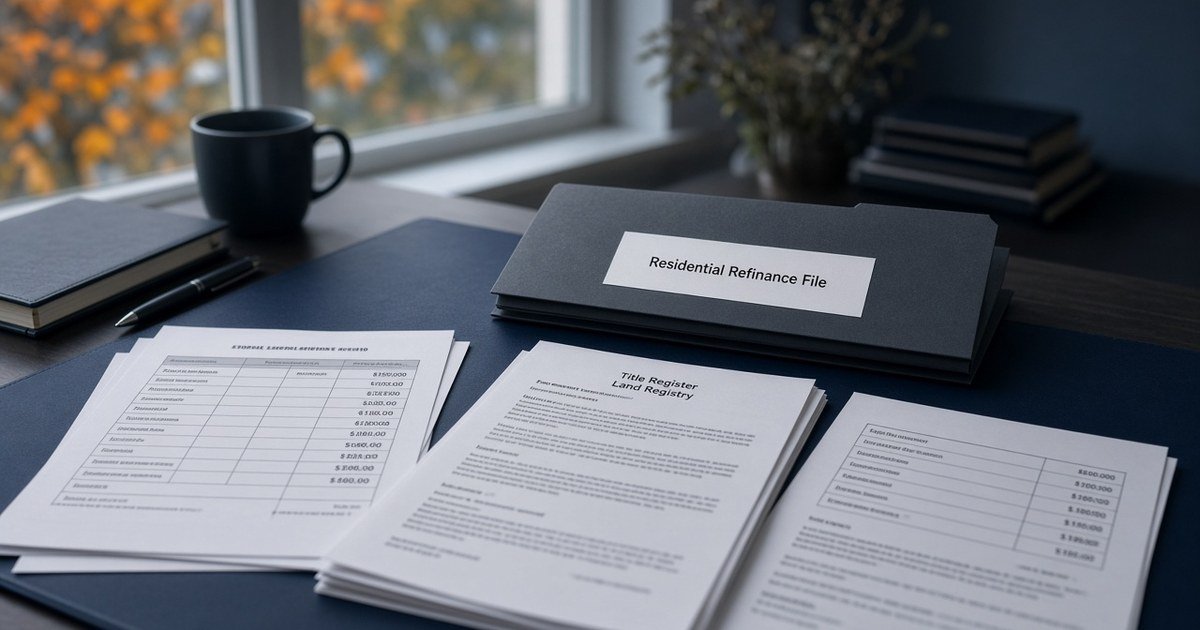
Our auction legal pack note covers the pre-bid zip. Title. Special conditions. Tenancies. Cash plan. The 28-day timeline covers the calendar. The page you are reading is narrower. It is the post-hammer memorandum, deposit and identity pack a specialist desk wants before it prices an unconditional England and Wales lot with a fixed completion date.
The book is commercial only. StatusKWO prices short bridging loans for professional investors, developers and corporate SPVs, not owner-occupier main-home buys. The published schedule currently shows a monthly rate from 1.25%, an entry fee of 2%, an exit fee of 1.5%, LTV up to 85%, loans from £10,000 to £10,000,000+ and terms up to 16 months. Those figures sit on the product sheet. They are not a promise that a screenshot replaces a signed contract.
Start the chase the same afternoon. Lot number. Auction house. Sale date. Hammer price. Deposit paid or due. Named completion date. Buyer name as it appears on the memorandum. Company number if an SPV buys. Named conveyancer. Gross and net loan. Named exit. Then attach the signed memorandum before the glossy brochure. Credit can read a brochure in five minutes. They cannot invent a binding buyer from a catalogue PDF.
Unconditional traditional auctions bind the buyer when the hammer falls. Modern Method of Auction and conditional lots behave differently. Read the conditional versus unconditional split before you treat every win as a 28-day bridge. The pack below assumes exchange happened in the room and completion is fixed.
Soft private-treaty markets do not extend that date. Quieter specialist completions make auction clocks more, not less, unforgiving. Miss the memorandum and you burn the first week of a four-week window on admin.
What the memorandum of sale must show before a DIP becomes an offer
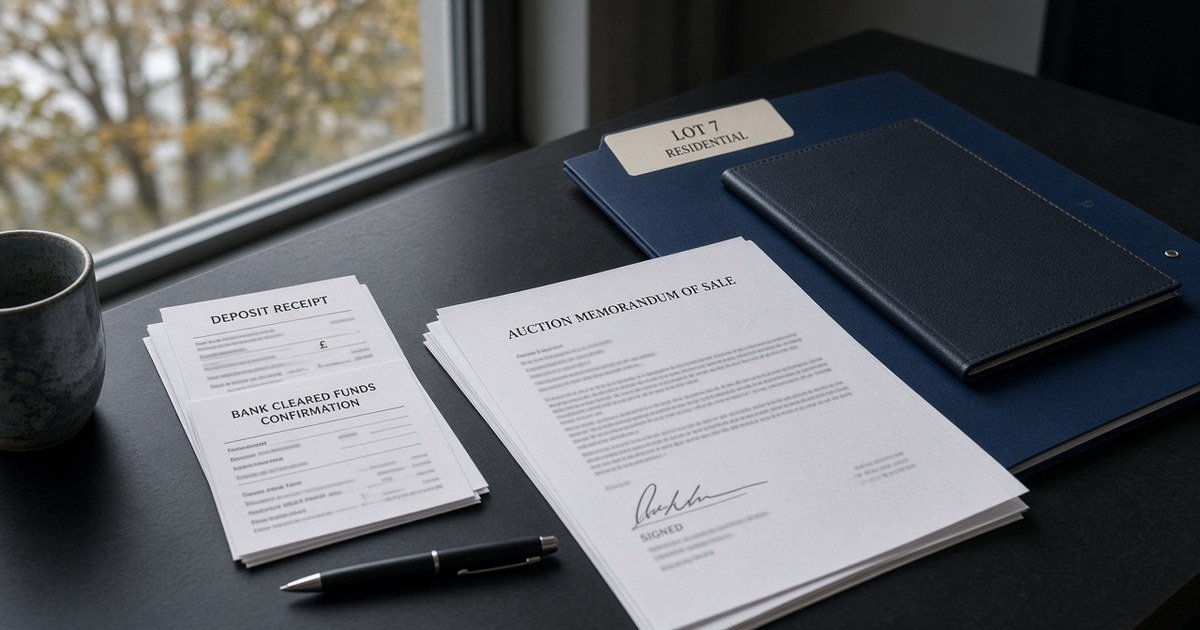
Ask for the signed memorandum or sale contract the auctioneer produced on the day. A catalogue page with a highlighter mark is not that document.
Credit wants the lot number and address. The seller and buyer names exactly as written. The price. The deposit amount. The completion date. Any buyer’s premium or seller cost recovery written into the special conditions that still bite after the hammer. The auctioneer’s signature block and the buyer’s signature block. The time and date of exchange if the house records it.
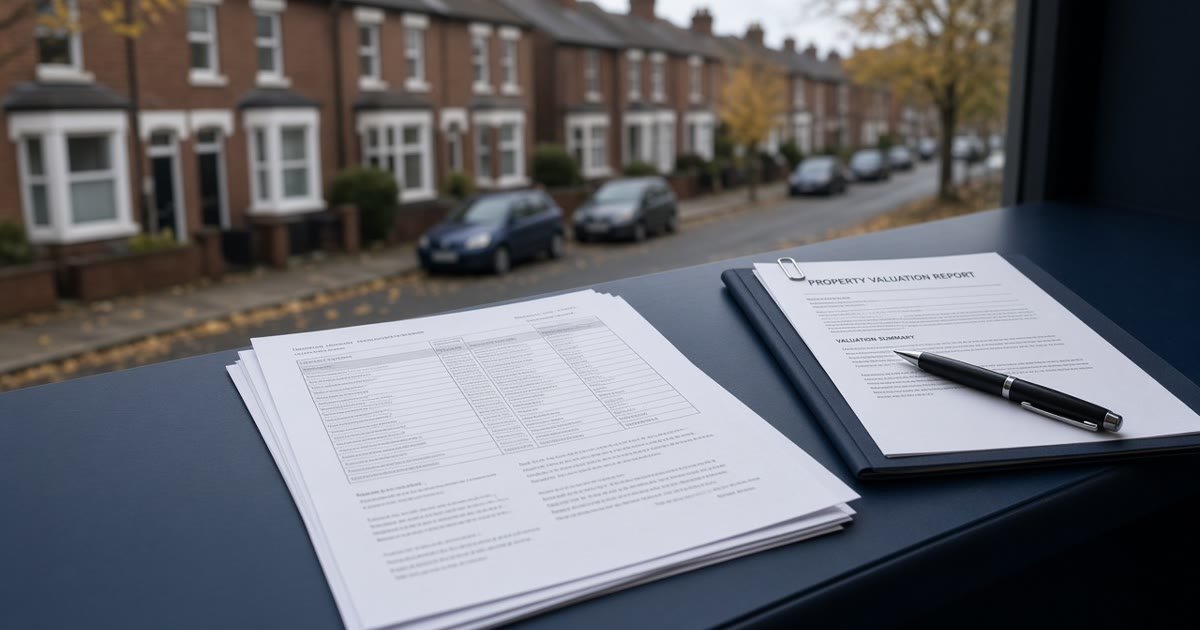
Match three strings before the offer goes live. Address on the memorandum. Address on the legal pack title. Address on the valuation instruction. Flat numbers that drift between the three create legal delay. If two titles sit behind one brochure photograph, draw it on page one. Do not leave the underwriter to invent a single freehold from two leases.
Price mismatches kill files. Guide was £240,000. DIP was raised at £250,000. Hammer was £268,000. The facility sized to the DIP now underfunds the purchase. Rewrite the one-pager before you argue with credit. New gross loan. New cash top-up. New SDLT estimate. A cheerful covering email that ignores the overbid will not survive first read.
Buyer’s premium and seller recoveries still matter after exchange. HMRC’s auction house fees example shows how a vendor’s auction fee the buyer agrees to pay can sit inside chargeable consideration, while a separate registration fee for the right to bid may not. Put the premium wording and the solicitor’s SDLT view in the same zip as the memorandum. Do not assume the hammer price alone is the tax number.
If the memorandum attaches an addendum, send the addendum. Late special conditions read from the rostrum still bind the buyer. Credit would rather see an ugly addendum on day one than discover a retention or overage on day eighteen.
Deposit receipt cleared funds and stakeholder wording
Auction finance fails on cash as often as it fails on title. The deposit is usually ten percent of the hammer price and is due immediately under the auction conditions.
Credit wants a receipt or auctioneer confirmation that names the amount, the payer, the receiving account and the time cleared funds arrived. A WhatsApp photo of a banking app is not a receipt. A promised “transfer pending” is not cleared funds.
Many England and Wales catalogues sit under auction conduct and sale conditions that follow the RICS Common Auction Conditions framework. Auction houses publish their own adopted wording. Acuitus’s published RICS Common Auction Conditions are a working example. Deposit due immediately after the auction. Minimum deposit rules. Stakeholder holding. Release on completion or to the person entitled if completion fails. Brokers do not need to recite every clause. They do need to show that the deposit for this lot was paid as the conditions require.
Stakeholder versus agent wording changes what happens if the deal collapses. Credit wants that line flagged when the receipt or conditions make it clear. A deposit held as stakeholder is not free cash the buyer can recycle into the bridging top-up. Do not count it twice.
Source of funds still applies to the deposit. A round-sum inward payment with no origin note is not a trail. If the deposit came from a prior sale, attach the completion statement. If it came from a director loan, attach the loan account or board minute and the director’s statements. Overseas funds add time. Say so on page one rather than hoping it is ignored. The wider source-of-funds pack covers the method. This page only asks for the deposit slice that already left the account.
Partial deposits create their own mess. Some houses take a fixed minimum on the day and the balance of the ten percent within a short window. Put both payments in the zip. A receipt for £5,000 on a £268,000 hammer is incomplete until the balance is evidenced or the special conditions expressly allow the lower figure.
Keep the timed trail. Auctioneer email. Client account credit advice. Broker chase note with the clock. When the receipt is slow, the dated chase log still helps. Silence with a completion date in three weeks is not a plan.
If the deposit was paid by a connected party who is not the buyer on the memorandum, stop. Explain the payment chain. Credit will ask why the buyer named on the contract is not the payer named on the receipt. Silence looks like a nominee story nobody planned.
Refundable versus non-refundable wording also belongs on page one when the conditions are odd. Most traditional deposits are at risk if the buyer defaults. Some addenda change that story. Credit prices risk. They need the clause, not a verbal assurance from the room.
Buyer name company number and attorney mismatches that stall funding
Identity mismatches stall more auction bridges than soft valuations.
Match the buyer on the memorandum to the borrower on the facility. If John Smith signed in the room and Acme Property Holdings Limited is applying for the bridge, the pack needs the transfer or nomination route written down. Credit will not invent a company purchase from a personal signature.
Company buyers need the company number on the one-pager and Companies House papers in the same zip as the memorandum. Director names must match the people who signed or the attorney paperwork that authorised them. A board minute dated after the hammer is late. Better to have authority before the bid.
Attorney and proxy bidding needs the authority letter in the first email. Auction rooms accept bids from agents. Specialist lenders still need to see who bound the buyer and under what power. A covering line that says “bid by agent” is not enough when the memorandum shows a name credit has never seen.
Joint buyers need both names on the facility or a clear explanation of who borrows and who takes title. A memorandum in two names and a loan application in one creates charge and SDLT friction. Draw the structure before valuation day.
Leasehold and freehold labels must match the title. GOV.UK’s public Land Registry search guidance explains how buyers obtain register and plan copies. Credit still wants those documents beside the memorandum, not a promise that someone will download them later. Tenure wrong on the one-pager is an early red flag.
If the catalogue sold “subject to tenancies” and the memorandum is silent, send the tenancy schedule anyway. Vacant possession claims need empty evidence. Tenanted stock needs rent and deposit protection papers. Mixing the two stories in one covering email is how files bounce.
Completion date diary interest on late completion and cash waterfall
The memorandum locks a date. Credit prices against that date, not against a hope that the seller will be soft.
Write the completion date on page one. Count working days to valuation. Count working days to legal replies. Count working days to funds. If the maths is already thin on the afternoon of the hammer, say so. A facility that can only complete if nothing slips is already in trouble.
Interest on late completion is not a soft admin point. Unconditional lots usually allow the seller to serve notice and keep the deposit if the buyer fails. Special conditions set the rate and the mechanics. Credit will ask whether the borrower can still clear completion if the valuation or legal replies slip by a few days. A facility sized to the last pound of available cash fails that test. See what happens if you win and cannot complete for the commercial cost of a missed clock. Prevention is cheaper.
Build a simple cash waterfall. Hammer. Buyer’s premium. Seller recoveries. Deposit already paid. Balance of purchase price. SDLT. Buyer legal fees. Net loan. Equity still required. Shortfall or surplus. Bridging can fund the purchase price against the security. It does not invent cash for tax and fees the borrower forgot to model.
SDLT timing is separate from the bridging drawdown. The return and payment sit with HMRC after completion under the usual rules. The borrower’s solicitor still needs the cash available. Misreading a buyer’s premium as outside consideration is a common error on auction files. Use the HMRC auction fees example as the starting point and let the solicitor confirm the live lot.
Insurance from exchange matters. Risk often passes to the buyer when the hammer falls under traditional conditions. Put the buildings insurance binder or cover note in the pack when the solicitor confirms risk has passed. A bare promise to “sort insurance next week” is not evidence.
Exit still belongs on the same page. Term refinance. Sale. Light works then refinance. Heavier works may belong on development finance with staged drawdowns rather than on a sixteen-month bridge. Mixing a full rebuild programme into an auction bridge email is how files bounce between desks.
Portfolio buyers who pick up one auction lot beside a wider book should say so. The portfolio finance desk will still want rent roll and company papers for the wider story. They will not infer a portfolio from one memorandum.
Modern Method reservation fees versus traditional deposits
Not every “auction win” produces a traditional deposit receipt.
Modern Method of Auction and similar conditional routes often take a reservation fee instead of an immediate ten percent deposit and delay exchange. The fee is usually non-refundable and paid to the auction house, not as a stakeholder deposit toward the price. That changes cash planning and credit’s evidence ask.
If the lot is Modern Method, say so on page one. Attach the reservation agreement, the fee receipt and the exchange deadline. Do not send a traditional memorandum template and hope credit notices the difference. The conditional versus unconditional note covers why the finance clock changes. This pack only asks for the post-win papers that prove which clock you are on.
Reservation fees are easy to mis-model. They often sit outside the purchase price and still leave the buyer needing a full deposit at later exchange. Put both cash events in the waterfall. A broker who treats the reservation fee as the deposit will understate cash on exchange day.
Online and livestream traditional auctions still produce memoranda and deposits. The medium is not the structure. Ask which conditions apply before you label the file “online so it must be 56 days”.
RICS’s good practice note on real estate auctions is blunt about the split. Auction conduct conditions govern the room. Sale conditions govern the contract between seller and buyer. Special conditions rewrite the general sale conditions for that lot. Credit wants the papers that show which set bound this buyer after the win, not a generic blog summary of auction types.
What brokers should send the morning after the hammer
Send one zip. Name it clearly. Do not drip PDFs across six emails.
Include the one-page summary. Signed memorandum of sale or equivalent contract. Addendum if any. Deposit receipt or auctioneer cleared-funds confirmation. Source-of-funds note for the deposit. Buyer identity and company papers matching the memorandum. Official copies of the register and title plan. Special conditions already reviewed in the legal pack. Named conveyancer details. Completion cash waterfall. Insurance position if risk has passed. Named exit.
Say what changed after the bid. Hammer versus guide. Premium confirmed. Deposit route used. Any attorney signature. Any nomination into an SPV. Credit should see the live deal without opening twelve identically named files.
Use the decision in principle again only after the memorandum and deposit papers are ready. A DIP raised on a guide price wastes underwriter time when the hammer lands fifteen percent higher.
Keep a simple version table in the zip. Memorandum dated sale day. Deposit receipt timed at 15.40. Addendum scanned at 16.10. Credit should see which PDF is live. Delete superseded screenshots or mark them superseded in the filename.
Broker channels should treat the afternoon-after pack as part of packaging, not as a completion-week surprise. The brokers desk would rather see a dated chase for the receipt on sale day than a panicked call on day twenty.
Our general bridging pack note still covers identity, companies and exits. The legal pack note covers pre-bid papers. The source-of-funds note covers the wider cash trail. This page sits between them. After the hammer. Before the offer. Without the memorandum and deposit trail, the rest of the zip is a wish.
When the hammer is higher than the borrower expected, rewrite the one-pager before you argue with credit. New gross loan. New cash top-up. New exit residual. A tidy legal pack with a fantasy loan amount still fails.
Frequently asked questions
Can credit price an auction bridge on a catalogue extract alone?
No. Send the signed memorandum or sale contract, the deposit evidence and the buyer identity match. A catalogue page confirms the lot was marketed. It does not prove who bought it or on what terms.
Is a banking app screenshot enough for the deposit?
No. Ask for an auctioneer receipt or cleared-funds confirmation that names the amount, the payer and the receiving account. Screenshots without a receipt trail stall funding.
What if the buyer on the memorandum is not the SPV applying for the loan?
Stop and explain the nomination or transfer route. Credit will not invent a company purchase from a personal signature. Put the authority papers in the first zip.
Do Modern Method lots need the same memorandum pack?
They need the papers that prove the structure. Reservation agreement, fee receipt and exchange deadline replace a traditional memorandum and deposit receipt until exchange happens. Label the route on page one.
How does this sit beside the auction legal pack?
Separately. The legal pack is the pre-bid title and special-conditions zip. The memorandum and deposit pack is the post-hammer contract trail. Send both. Credit will not infer one from the other.